Sciatica During Pregnancy: Causes, Symptoms, and What Actually Helps
Sciatica is one of the most common pains women experience during pregnancy. Many moms feel a deep ache in the glute or sharp pain that travels down the leg and assume it’s just part of pregnancy.
But here’s the truth:
Sciatica during pregnancy is common, but it isn’t something you should just live with.
In most cases, there are simple things you can do to reduce the pain and get your body feeling better again.
Let’s break down why sciatica happens during pregnancy and what actually helps.
Also…if you’re looking for more helpful information like this, check out my podcast Every Mom is an Athlete!
What Is Sciatica?
The sciatic nerve is the largest nerve in your body. It starts in the lower back, runs through the glutes, and travels down the back of each leg all the way to the foot.
When this nerve becomes irritated, it can cause symptoms such as:
Pain in the glute or back of the hip
Sharp pain traveling down the leg
Tingling or numbness in the leg
Weakness or heaviness in the leg
Outside of pregnancy, sciatica is often caused by a disc herniation. But during pregnancy, the cause is usually different.
Make it stand out
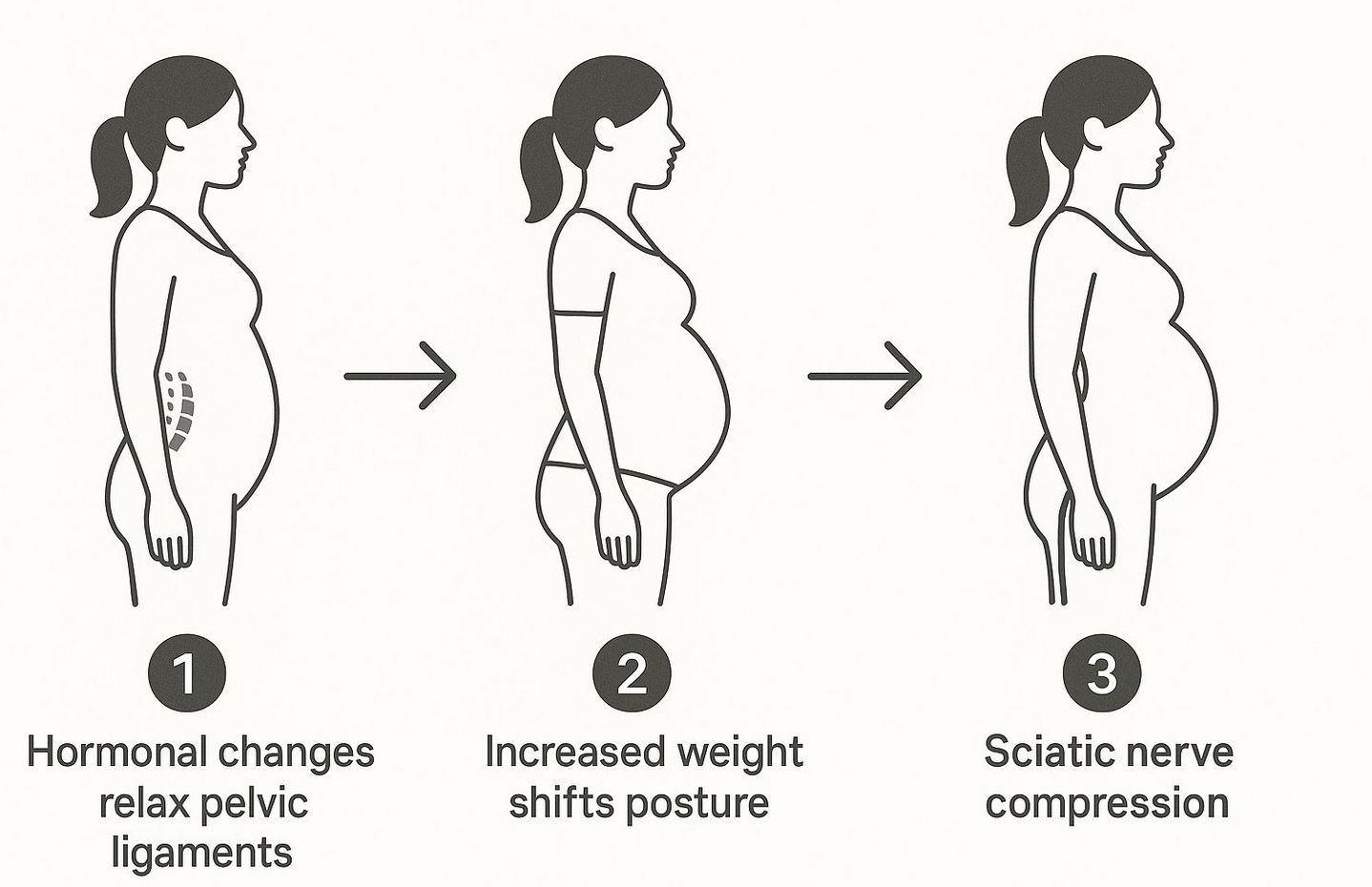
Sciatica during pregnancy is caused by hormonal changes, posture changes, increased weight and more.
Why Sciatica Happens During Pregnancy
Several changes in pregnancy can contribute to sciatic pain.
Hormonal changes
Pregnancy hormones cause ligaments to loosen, which allows the pelvis to shift and move more than usual. This can increase pressure around the sciatic nerve.
Changes in posture
As your belly grows, your center of gravity shifts forward. This often causes the pelvis to tilt forward and increases strain on the lower back and glutes.
Pelvic imbalance
If one side of the pelvis rotates or moves differently than the other, it can irritate muscles around the sciatic nerve and create symptoms that feel like sciatica.
The good news is that many cases of “pregnancy sciatica” are actually related to pelvic mechanics and muscle tension, which means they are very treatable.
What Helps Sciatica During Pregnancy
1. Sciatic nerve flossing
Many women try stretching their hamstrings when they feel pain down the leg. But if the sciatic nerve is irritated, aggressive stretching may not help.
Instead, nerve flossing exercises gently help the nerve glide through surrounding tissues.
2. Keep the pelvis aligned
Pelvic alignment is one of the most important factors in reducing sciatic pain during pregnancy.
Seeing a Webster-certified chiropractor can help restore balance in the pelvis and reduce strain on the sciatic nerve.
3. Strengthen the core
Core strength helps stabilize the spine and pelvis during pregnancy.
Safe pregnancy core work should focus on:
Transverse abdominis activation
Proper breathing
Pelvic floor coordination
A strong core reduces stress on the lower back and can significantly improve sciatic symptoms.
4. Reduce single-leg exercises temporarily
If you’re dealing with sciatic pain, exercises that load one side of the pelvis heavily may make symptoms worse.
Temporarily reducing movements like:
Lunges
Step-ups
Single-leg deadlifts
can sometimes help calm things down.
5. Foam roll the glutes
The piriformis muscle deep in the glute sits very close to the sciatic nerve. When this muscle becomes tight, it can irritate the nerve.
Foam rolling the glutes in a figure-four position can help release tension and reduce pain.
When to Talk to Your Doctor
Most pregnancy sciatica improves with proper movement and pelvic support. However, you should talk to your provider if you experience:
Worsening numbness or tingling
Weakness in the foot or leg
Severe pain affecting sleep or walking
These symptoms may require further evaluation.
The Bottom Line
Sciatica during pregnancy is very common, but that doesn’t mean you have to suffer through it.
Improving pelvic alignment, strengthening your core, and addressing muscle tension can often make a significant difference.
If you want step-by-step guidance at home, my Pelvic Pain Fix Plan walks you through exactly how to address pelvic and sciatic pain during pregnancy safely.
Next in this series, we’ll talk about another common pregnancy pain: pubic symphysis pain (SPD).